Key Takeaways
- Corneal ectasia is a broad term for conditions that cause the cornea to thin and bulge into an irregular shape.
- Keratoconus is the most common type of corneal ectasia, and it develops naturally over time without a clear cause.
- Corneal ectasia can also develop after certain laser vision correction procedures, such as LASIK, in patients with an underlying corneal weakness.
- Both conditions cause blurry, distorted vision and are diagnosed with corneal mapping technology called topography.
- Everett & Hurite Eyecare Specialists offers corneal disease and specialty contact lens expertise in Pittsburgh, and patients noticing changes in their vision should request an appointment for an evaluation.
Understanding Corneal Ectasia as a Category of Conditions
The cornea is the clear, dome-shaped front surface of the eye that helps focus light so a person can see clearly. Corneal ectasia is the general term eye doctors use for a group of conditions in which the cornea progressively thins and loses its normal round shape, instead bulging outward into a cone or irregular curve. This change distorts vision because light can no longer focus correctly as it passes through the misshapen cornea.
Keratoconus is the most well-known and most common form of corneal ectasia, but it is not the only one. Corneal ectasia can also develop after certain corneal refractive surgeries, most often LASIK, in a condition sometimes called post-LASIK ectasia or post-refractive ectasia.
What Is Keratoconus?
Keratoconus, often abbreviated to KC, is a condition in which the normally round, dome-shaped cornea progressively thins and weakens, developing a cone-like bulge and optical irregularity. According to Cleveland Clinic, keratoconus is typically found during a patient's teenage years or 20s and 30s, and the cause is largely unknown, though it does appear to run in families and occurs more often in people who have certain medical conditions.
Symptoms of Keratoconus
- Gradually worsening or distorted vision in one or both eyes.
- Increased sensitivity to light.
- Seeing halos around bright lights.
- Frequent changes in eyeglass or contact lens prescriptions.
What Is Post-LASIK Corneal Ectasia?
Post-LASIK ectasia is a rare complication of LASIK and similar laser vision correction procedures. According to the Refractive Surgery Council, it is a weakening of the cornea following refractive surgery that can lead to corneal bulging and vision loss, and research suggests it is most likely to occur in patients who had mild, subclinical keratoconus that was not detected before surgery. Corneal topography, a mapping test of the cornea's surface, is one of the key tools eye doctors use to screen out patients who may be at higher risk before recommending LASIK.
This is one of the most important differences between the two conditions: keratoconus develops on its own, while post-LASIK ectasia is triggered by a surgical procedure in an eye that already had an undetected corneal weakness.
Keratoconus vs. Corneal Ectasia After LASIK
| Keratoconus | Post-LASIK Ectasia | |
|---|---|---|
| Cause | Develops naturally, cause largely unknown | Triggered by LASIK or similar refractive surgery in an eye with underlying corneal weakness |
| Typical Age of Onset | Teens, 20s, or 30s | Can occur at any age after refractive surgery |
| Detectable Before Symptoms? | Sometimes found on routine corneal mapping | Risk can often be flagged before surgery with corneal topography |
| Relationship Between the Two | The most common and best-known type of corneal ectasia | A form of corneal ectasia, closely related to subclinical keratoconus |
How Corneal Ectasia and Keratoconus Are Diagnosed
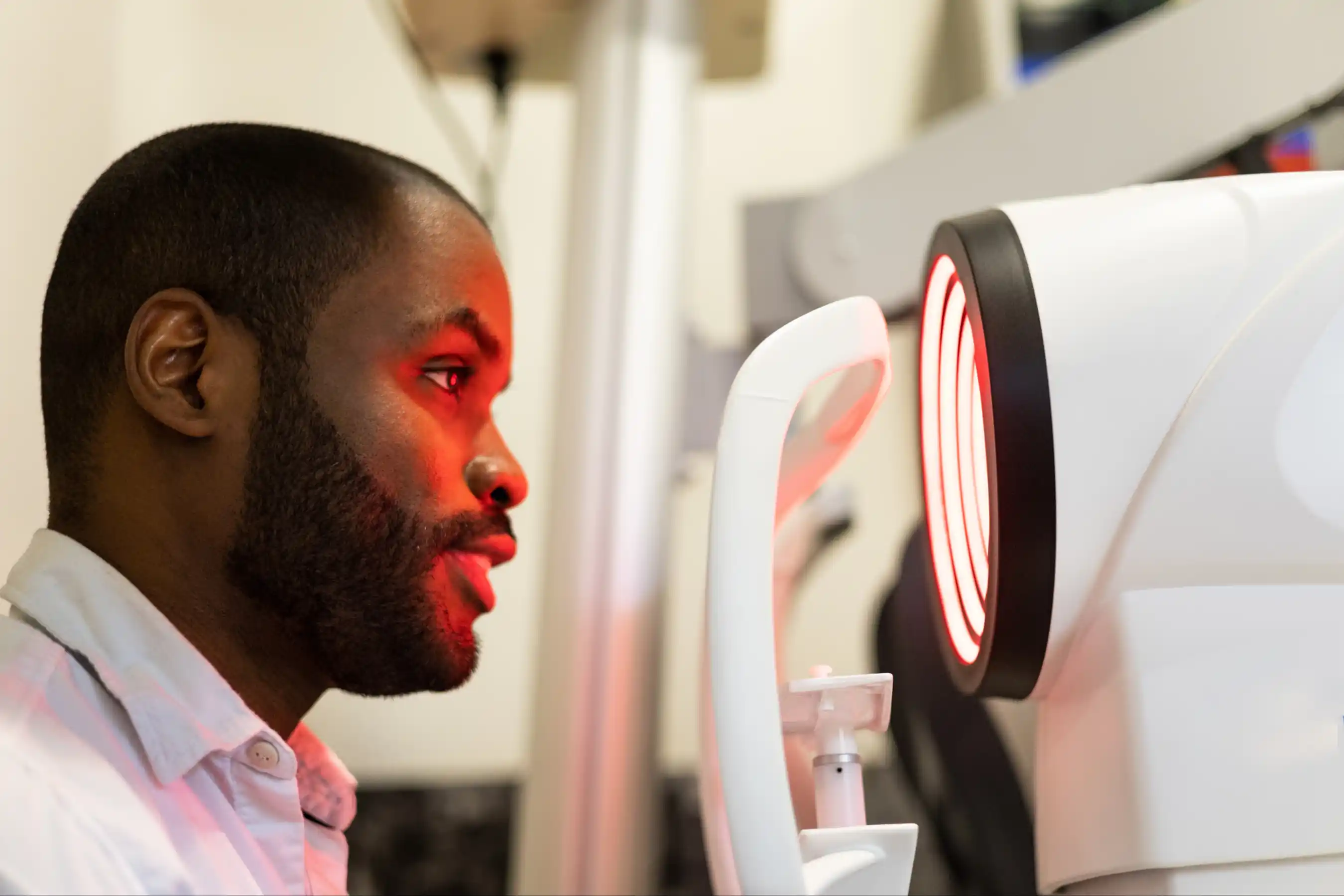
Diagnosing either condition starts with a comprehensive eye exam and a review of the patient's vision history. Eye doctors use corneal topography and tomography, which create a detailed map of the cornea's curvature and thickness, to detect thinning or irregular shape changes that may not be visible during a standard exam. Everett & Hurite's care team includes providers who specialize in identifying these changes early, including Dr. Natalie Noble, a corneal disease and specialty contact lens specialist.
Treatment Options for Corneal Ectasia and Keratoconus
Treatment depends on how advanced the condition is at the time of diagnosis. In earlier stages, glasses or soft contact lenses may still correct vision. As the cornea continues to thin and change shape, specialized lenses such as scleral or hybrid lenses are often needed to provide clearer vision. Everett & Hurite offers corneal cross-linking using Avedro technology, a minimally invasive, FDA-approved procedure designed to stabilize the cornea and stop the progression of keratoconus. In more advanced cases that do not respond to these options, a corneal transplant may be recommended.
Protecting Your Cornea Starts With Early Detection
Whether it is naturally occurring keratoconus or corneal ectasia related to a past refractive procedure, catching the condition early gives patients more treatment options and a better chance of preserving clear vision. Everett & Hurite Eyecare Specialists has provided specialty corneal care to the Pittsburgh region since 1974, and its team can help determine which type of corneal change is affecting your vision and the most appropriate way to manage it.
If your vision has become blurry or distorted, or if you have noticed frequent changes in your eyeglass prescription, schedule an appointment with Everett & Hurite Eyecare Specialists for a comprehensive corneal evaluation.
Frequently Asked Questions
Is corneal ectasia the same thing as keratoconus?
Not exactly. Corneal ectasia is the broader category of conditions that cause the cornea to thin and bulge, and keratoconus is the most common and best-known type of corneal ectasia. Not everyone with corneal ectasia has keratoconus, since it can also occur after certain refractive surgeries.
Can LASIK cause keratoconus?
LASIK does not cause keratoconus in a healthy cornea, but it can worsen an undetected, mild case of keratoconus, which is part of why corneal topography screening is so important before any refractive surgery is performed.
What are the early signs of keratoconus?
Early signs of keratoconus often include gradually blurring or distorted vision, increased sensitivity to light, and needing more frequent changes to eyeglass or contact lens prescriptions.
Can corneal ectasia be reversed?
Corneal ectasia and keratoconus cannot be reversed, but their progression can often be slowed or stopped with treatments like corneal cross-linking, especially when the condition is caught early.
Where can I find a corneal specialist near me in the Pittsburgh area?
Everett & Hurite Eyecare Specialists has locations across Pittsburgh, Warrendale, Butler, Greensburg, Southpointe, Monroeville, Steubenville, and Weirton, with providers who specialize in corneal disease and keratoconus care.
